Patrick Ostrowsky


un-hold is about letting go of places, cities, and people—even when you do not exactly know what it is you need to lose. Every work is built from the places I lived in over the past years: fragments of New York, fleeting images of Paris.
[ 1.0 / ROOM ]
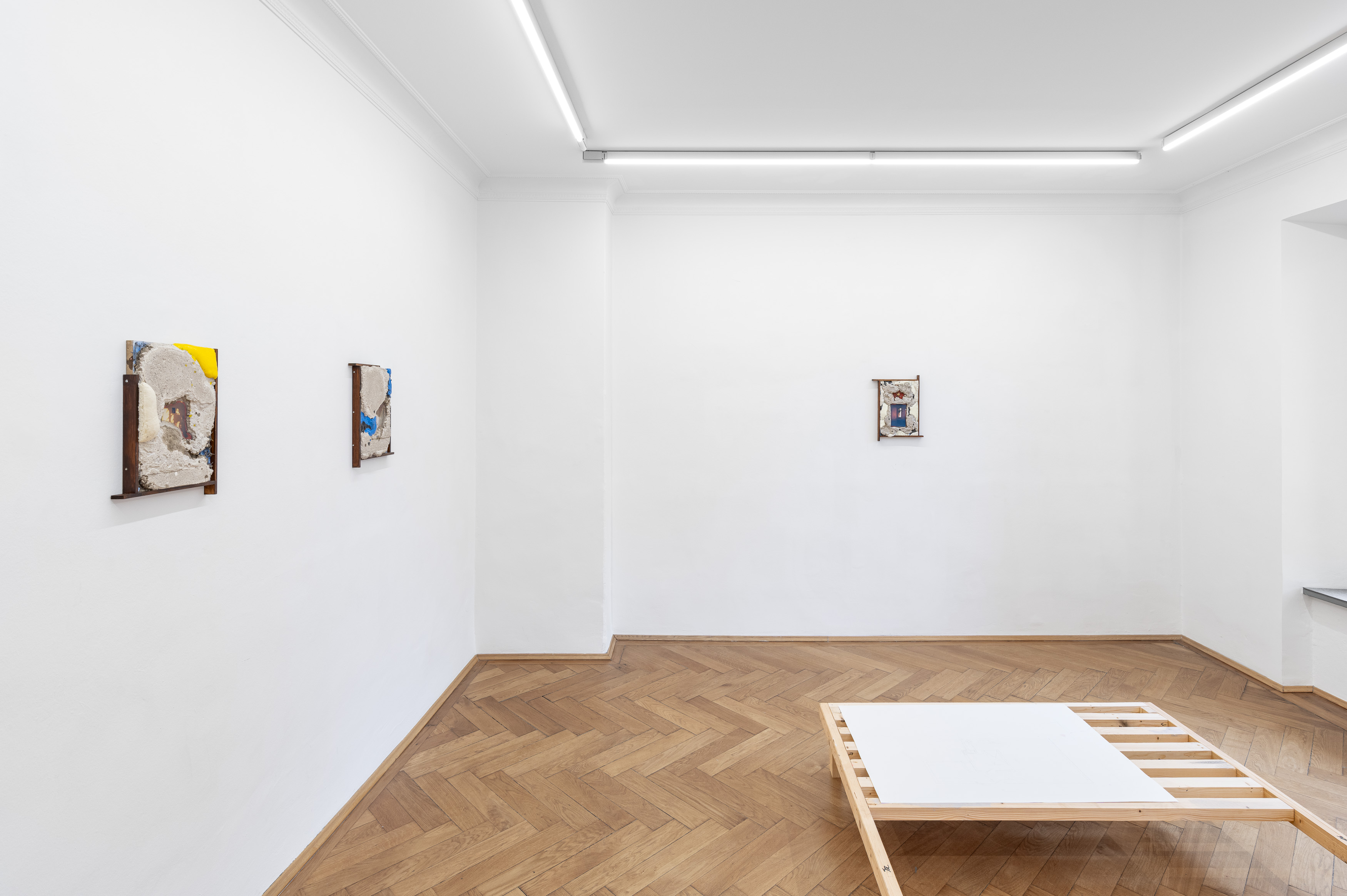
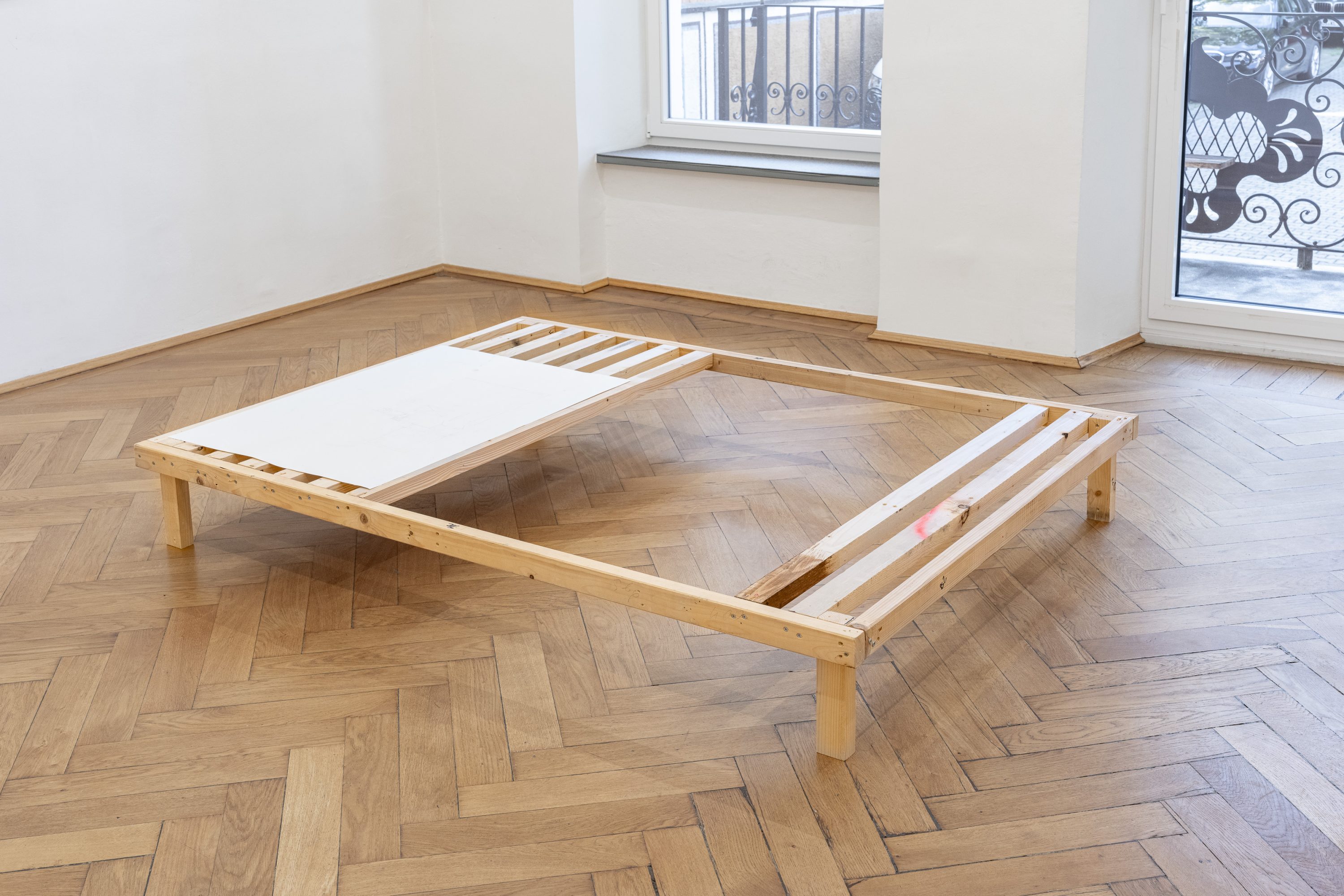
The first room is the most accessible to the outside world; separated only by a glass door, it can be entered through the balcony. Here, a new group of works, soft bindings, takes shape around a skeletal bed frame—a 1:1 model is stripped of its purpose, with pieces deliberately removed from its slatted frame. Instead of offering a safe place to rest, a bed (anyway, don’t be a stranger) is fragmented and unfinished, acting as a carrier for the floor plan of my former apartment in Brooklyn.
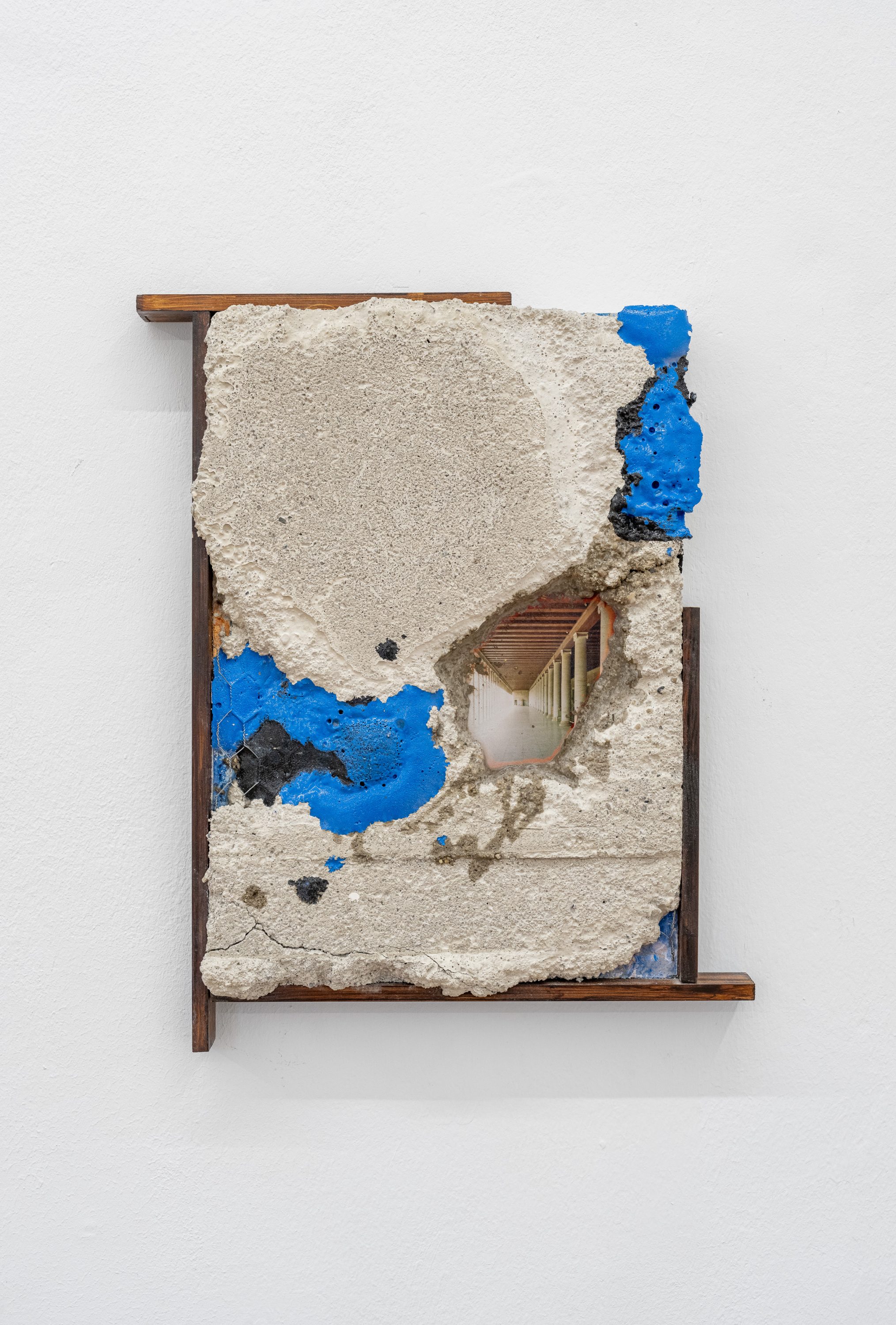
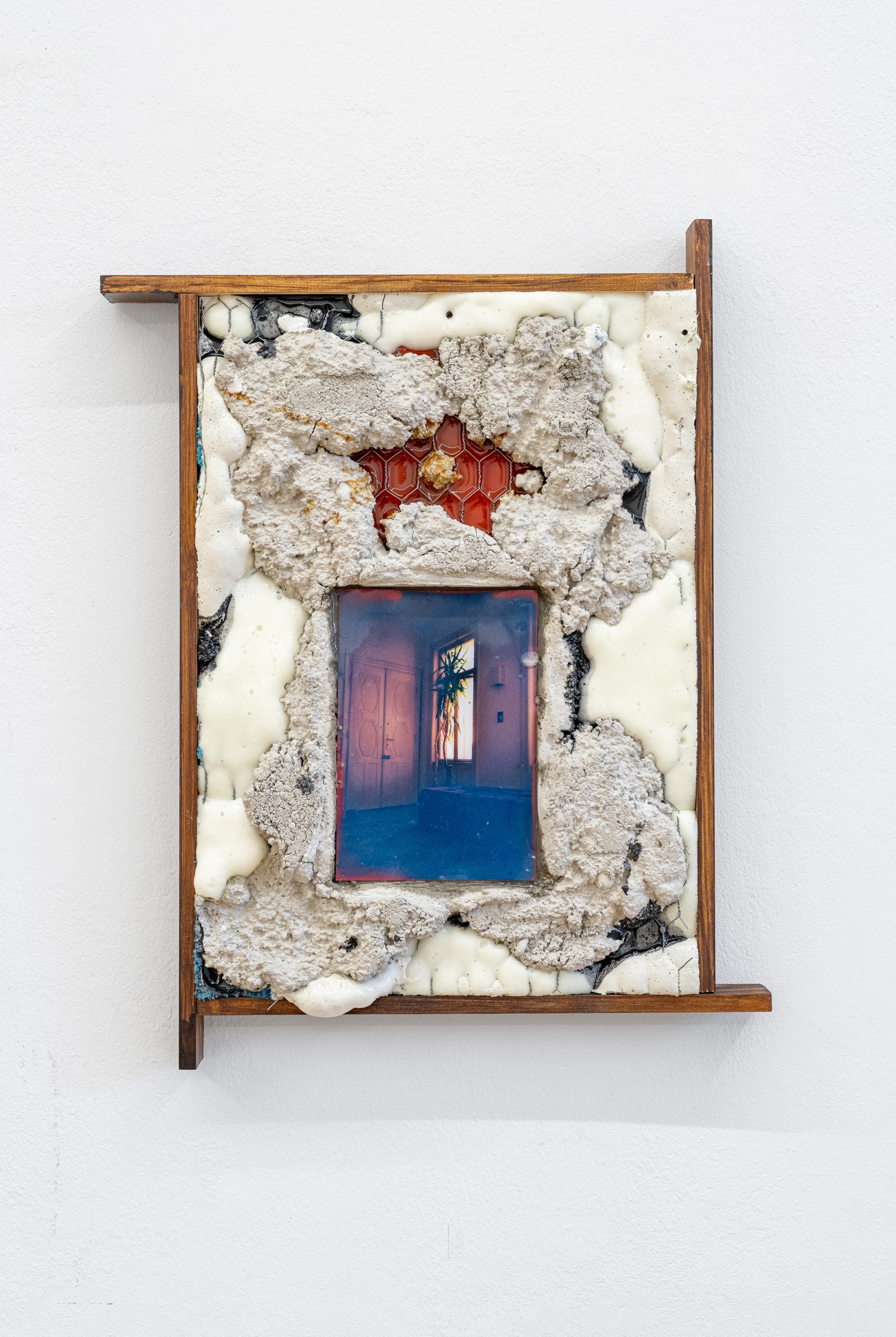
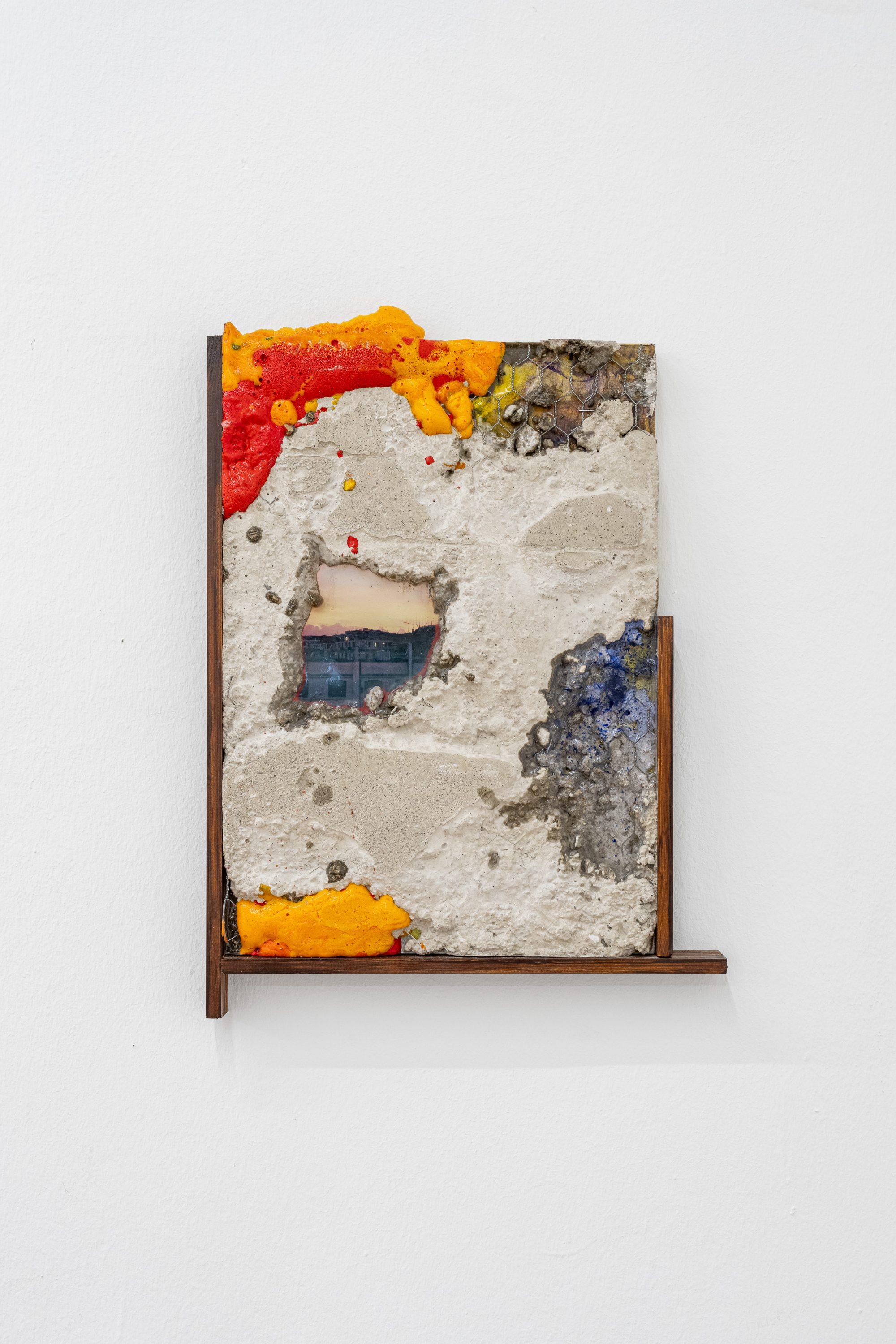
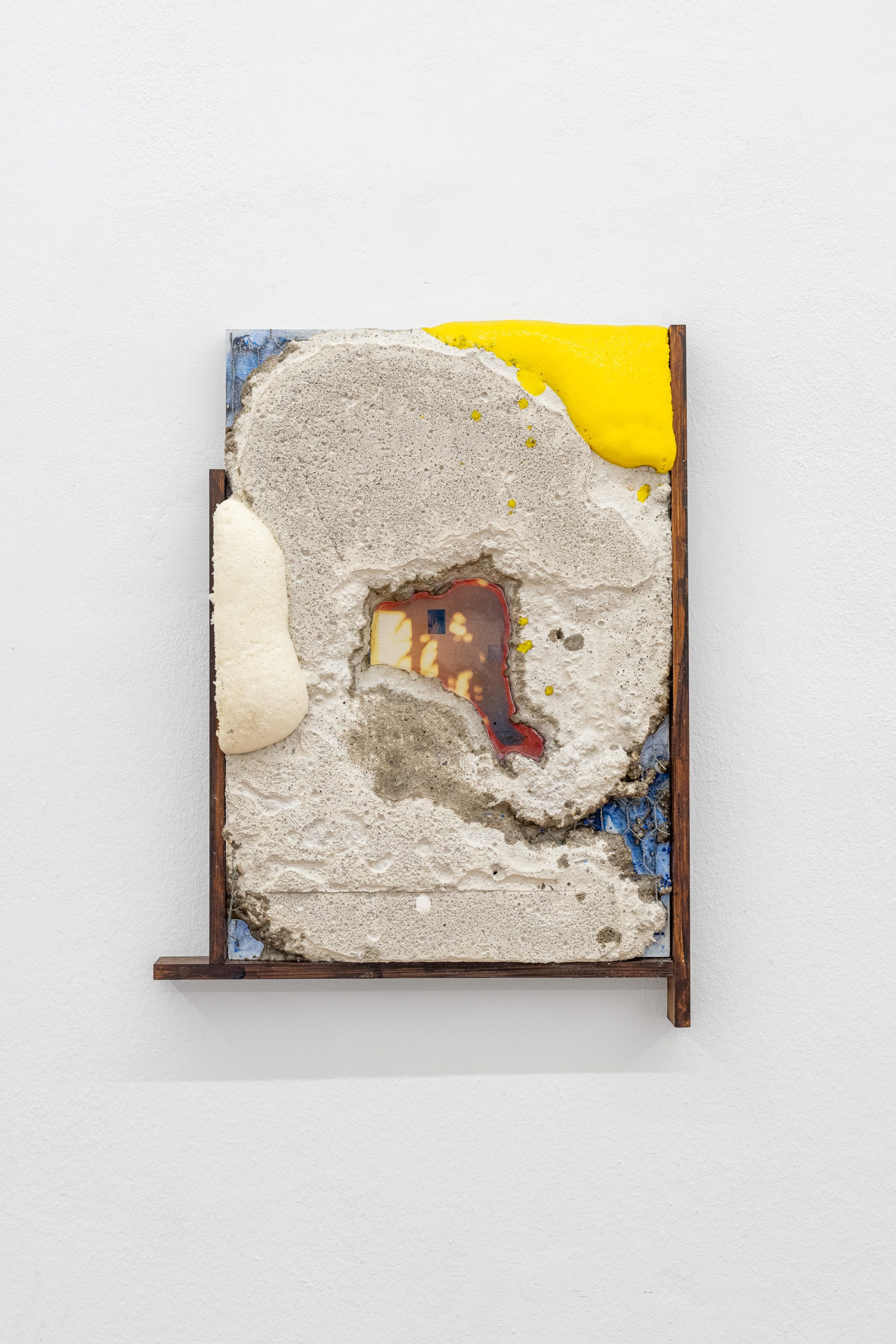
Surrounding it, a series of four concrete bas-reliefs combines photography sourced from my personal archive with my technique of casting concrete mixtures. The concrete is poured over formerly painted wood slabs; the photos are set into the surface and sealed under epoxy resin. During curing, the red ink dissolves into the liquid resin, resulting in a distinct bleeding effect, a hazy halo around the photos’ edges.
[ 2.0 / ROOM]
un-hold treats memory as amorphous and fluid, rather than as an organized bank of nostalgic images from which you can retrieve or discard as you please. Images float on the water’s surface, a vast ocean, a small puddle. This type of memory has no fixed location. It’s always moving and changing.
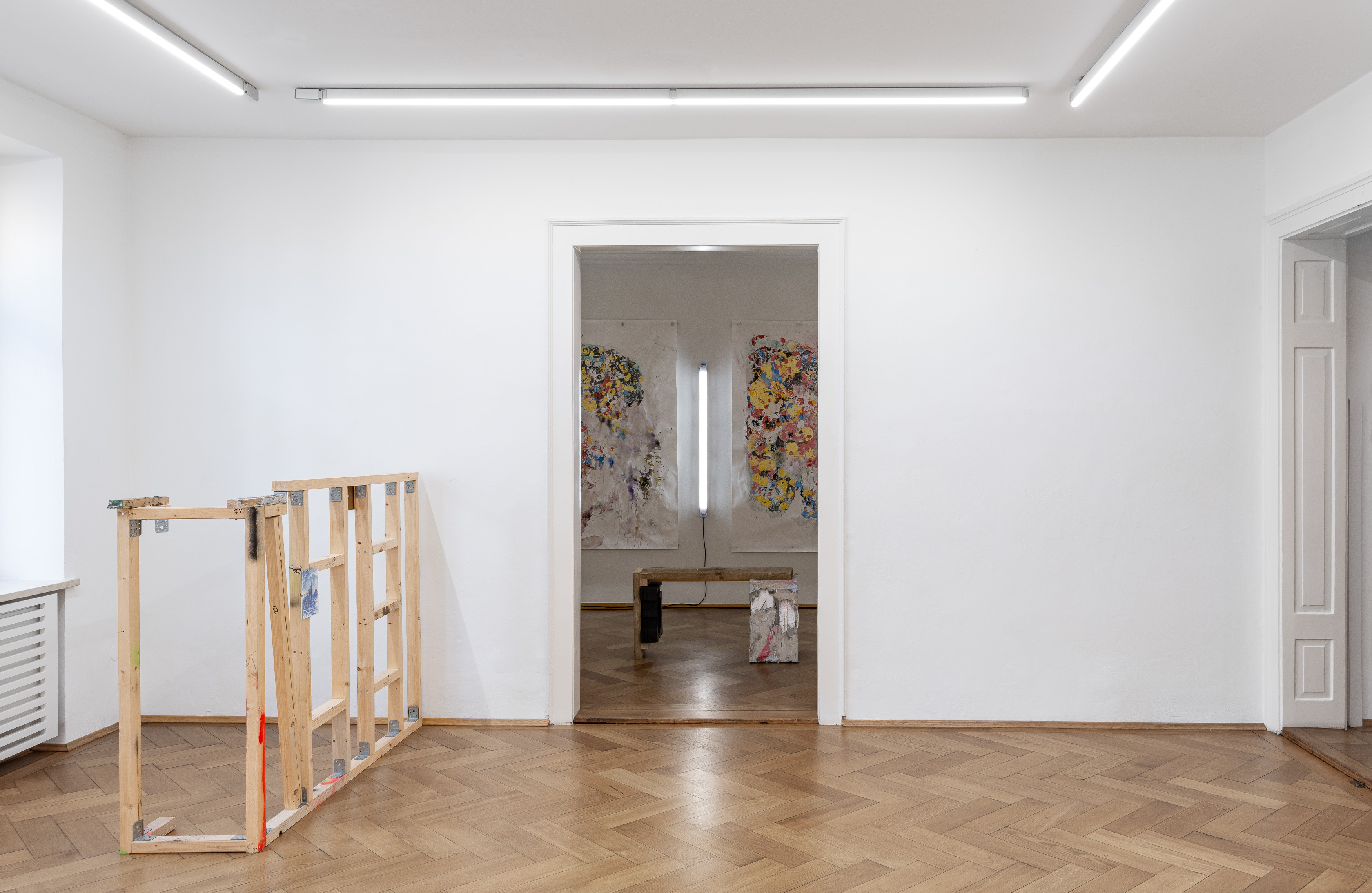
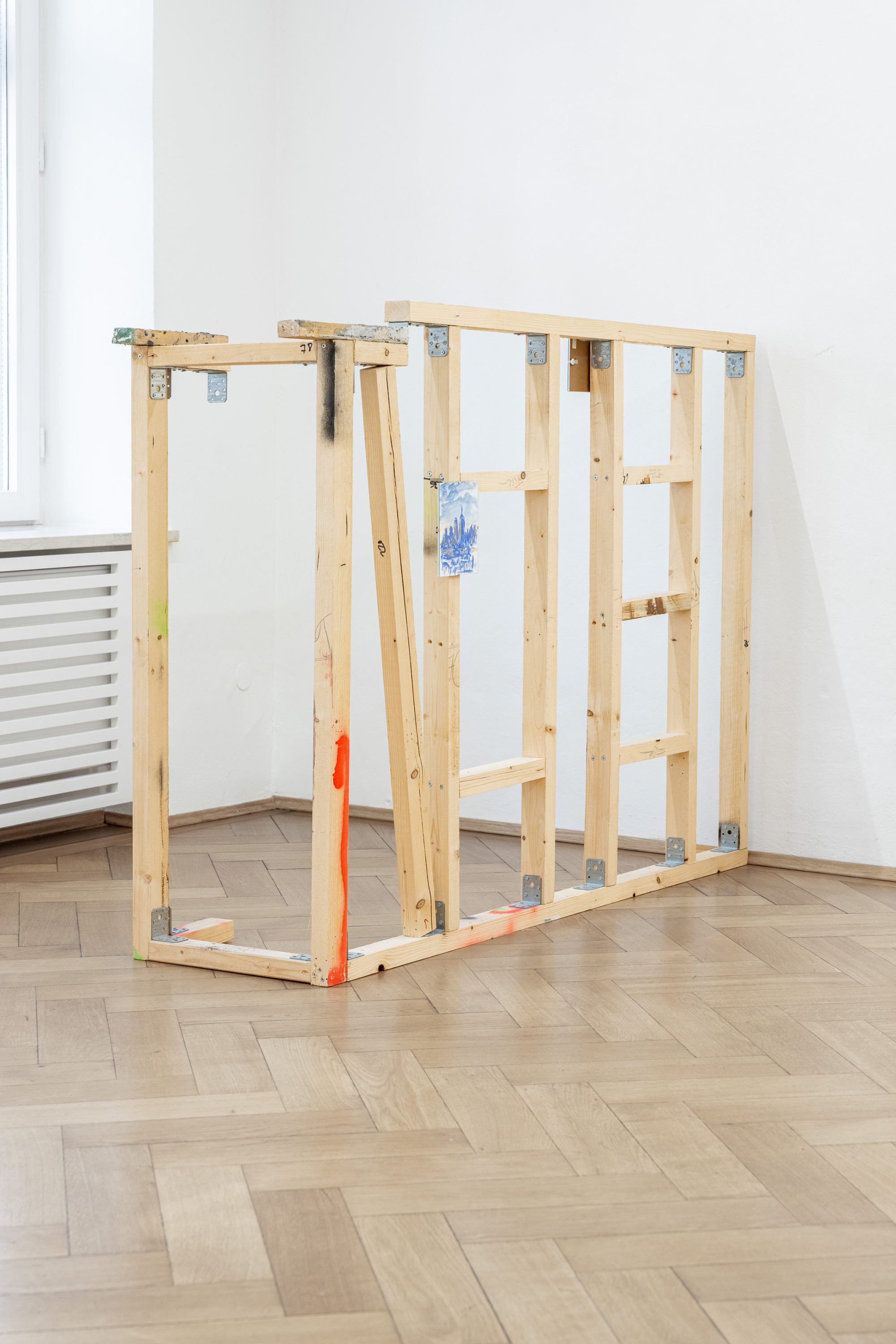
I reconstructed a 1:2 scale wooden skeleton of an apartment wall from my home in Brooklyn. Made from salvaged wood. On display in the gallery, the scale model becomes a partition, a pedestal, a wall within a room.
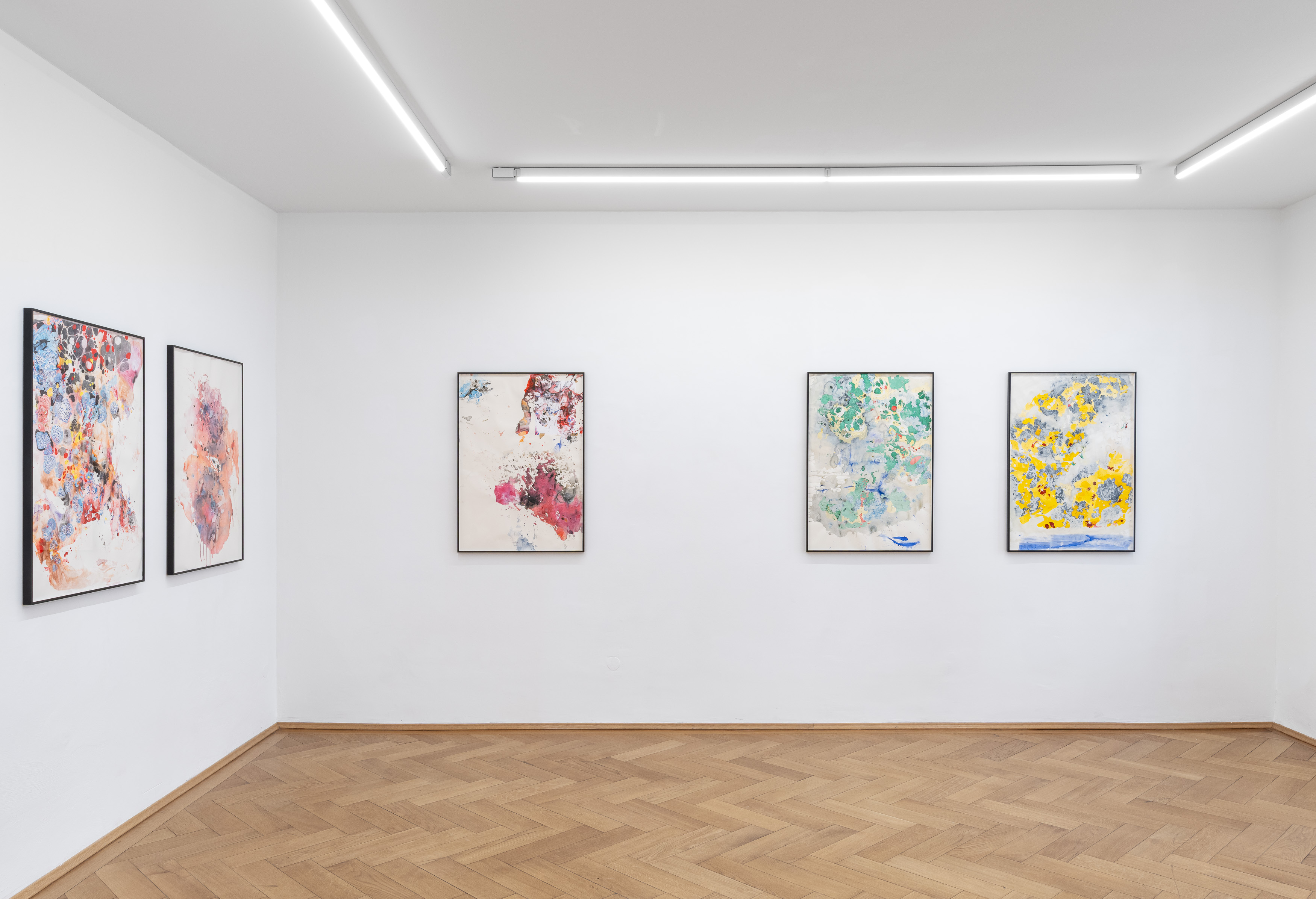
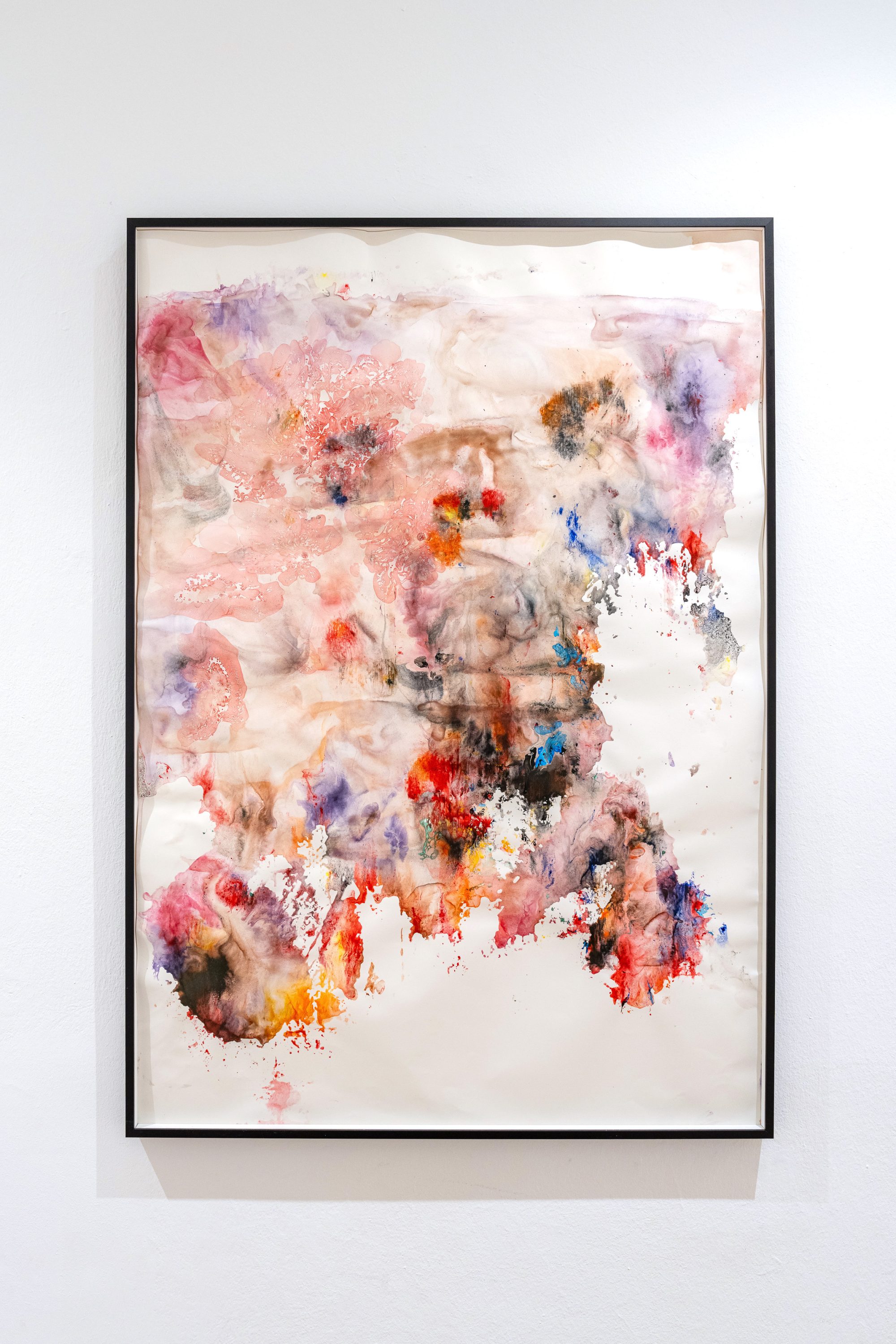
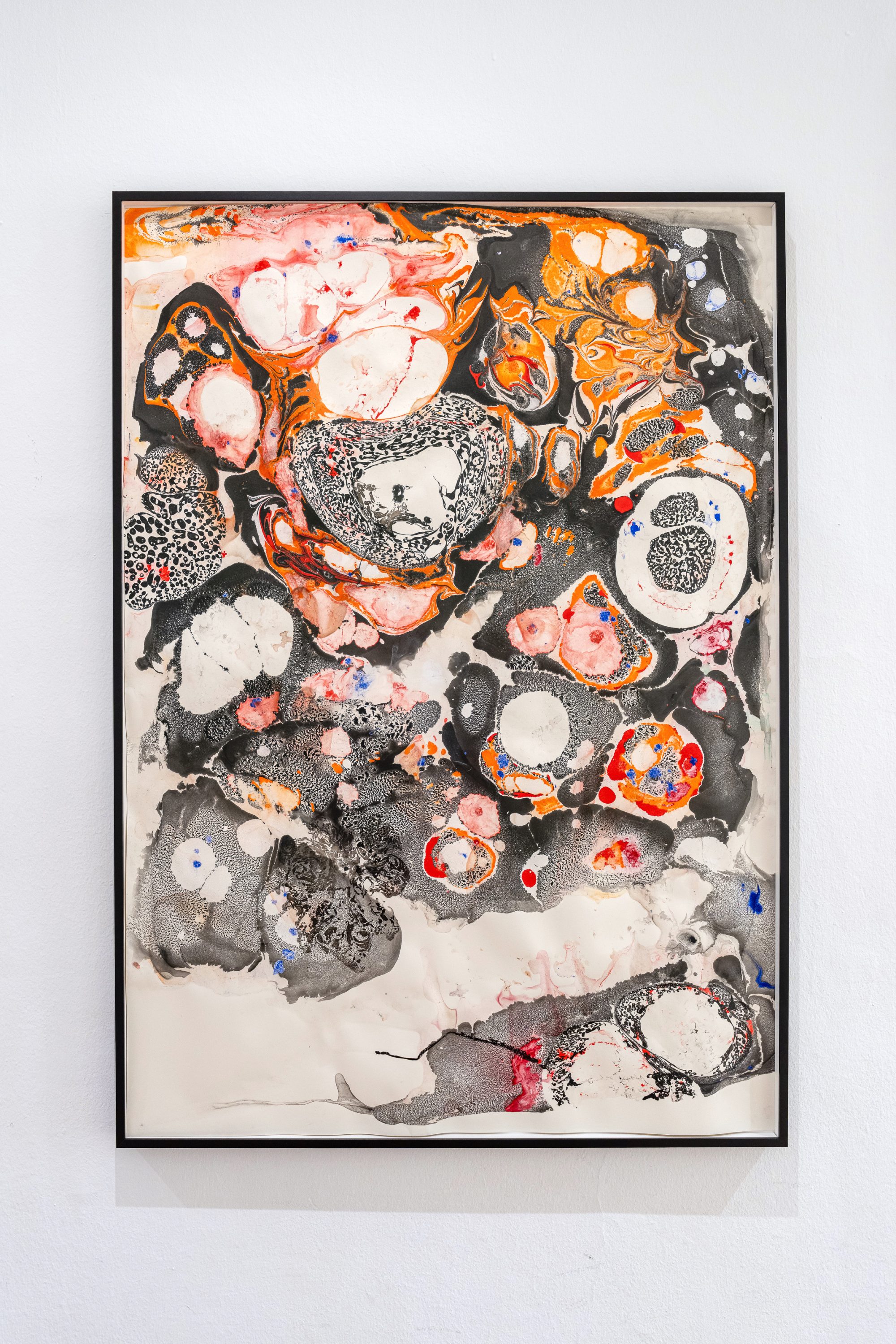
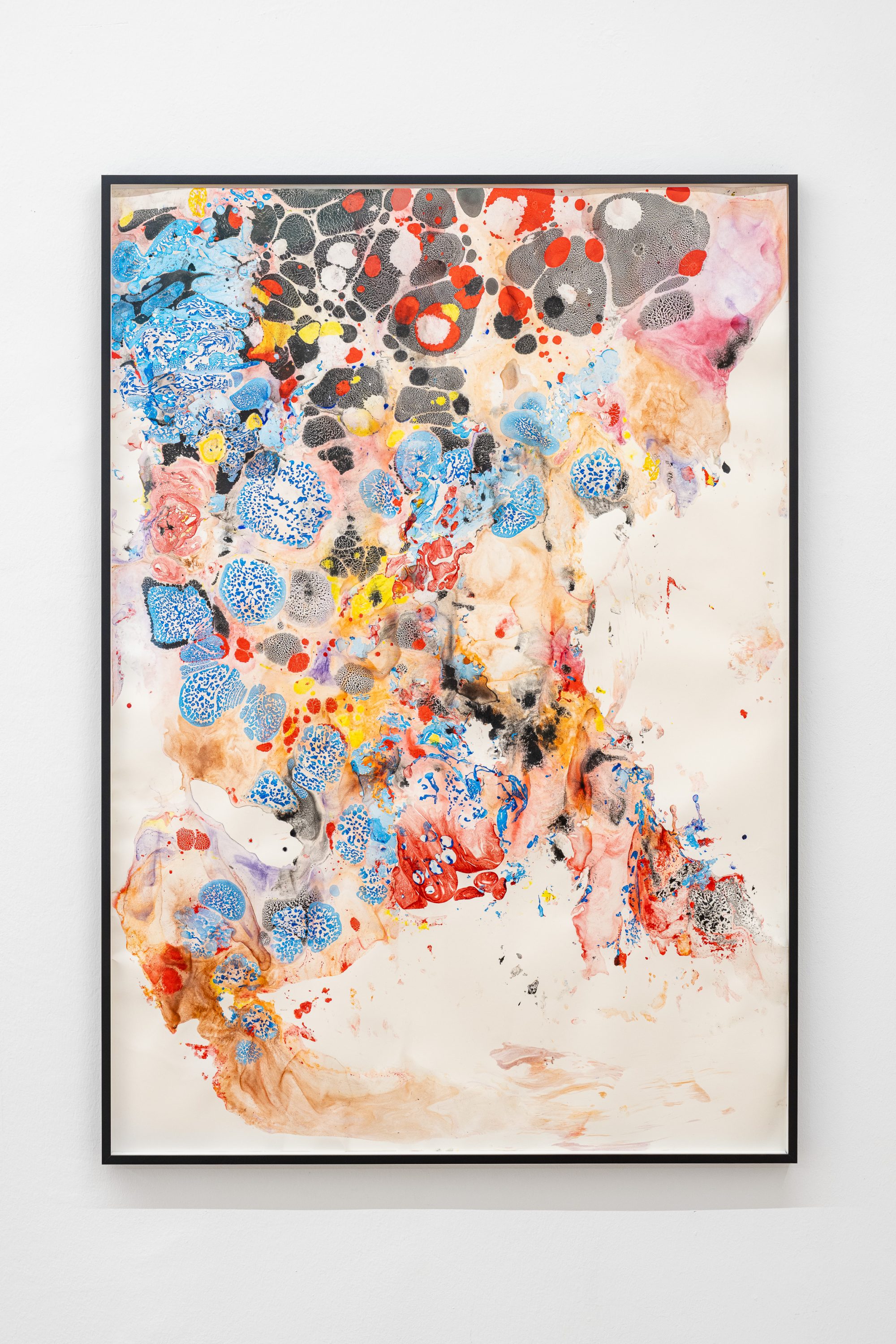
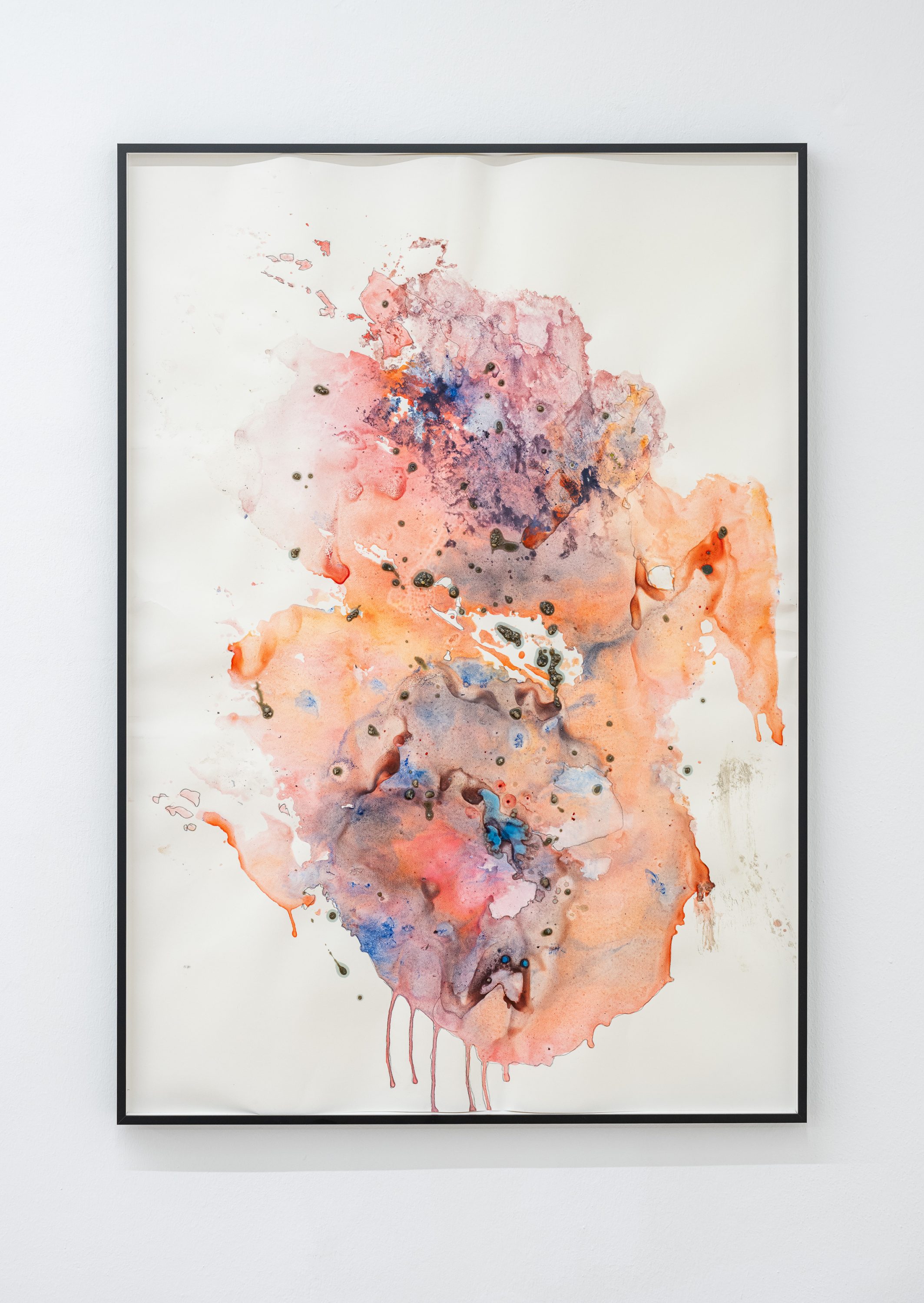
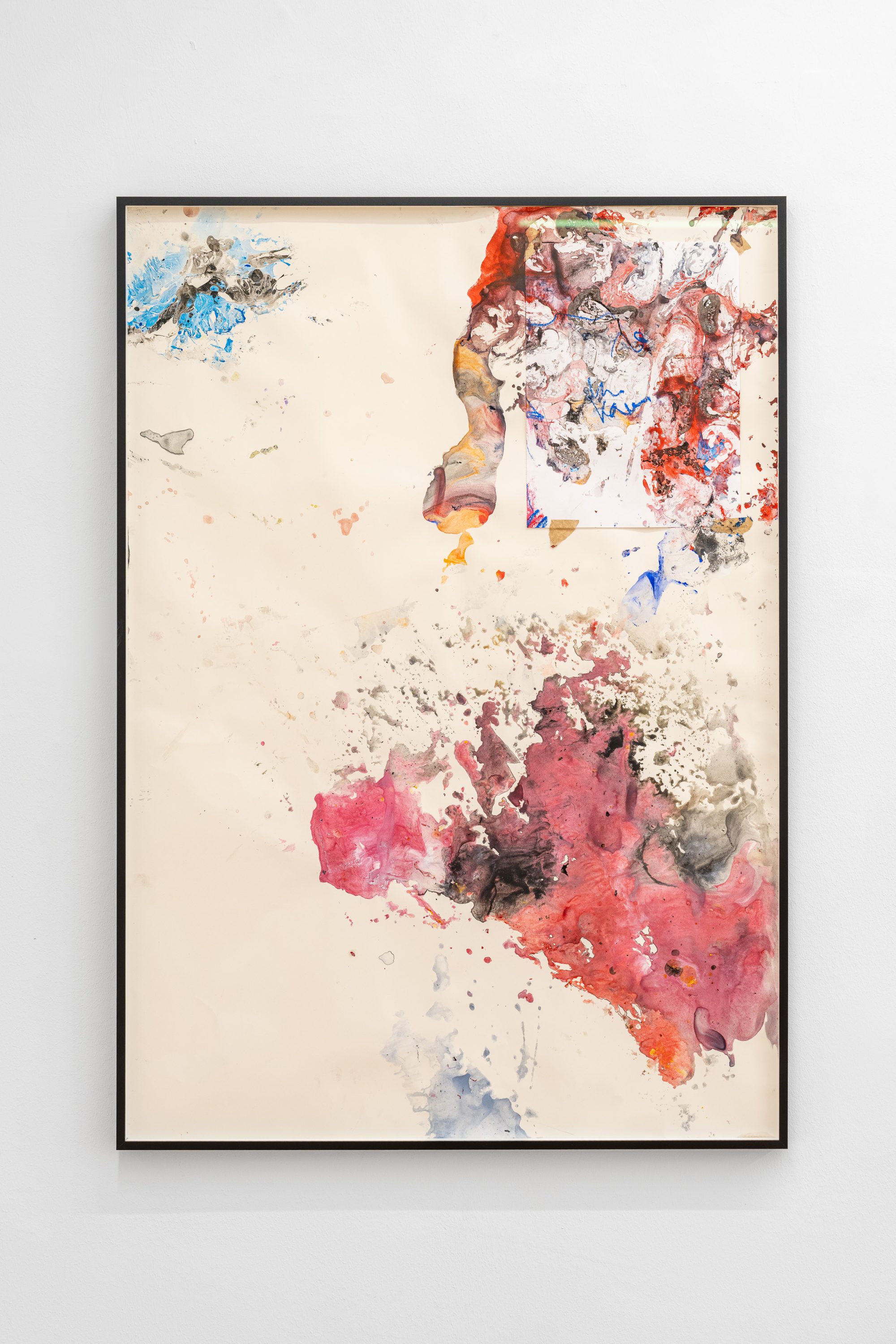
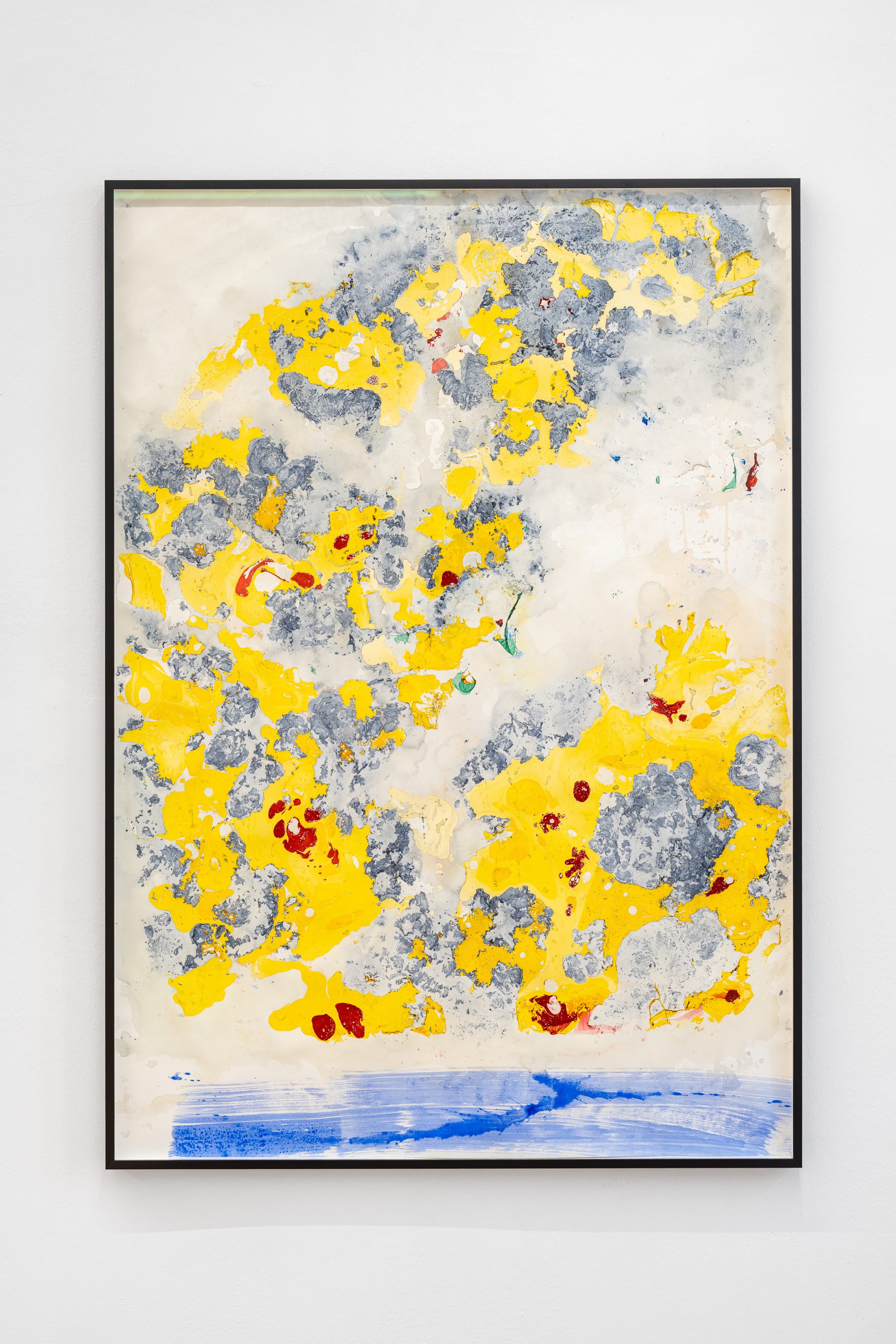
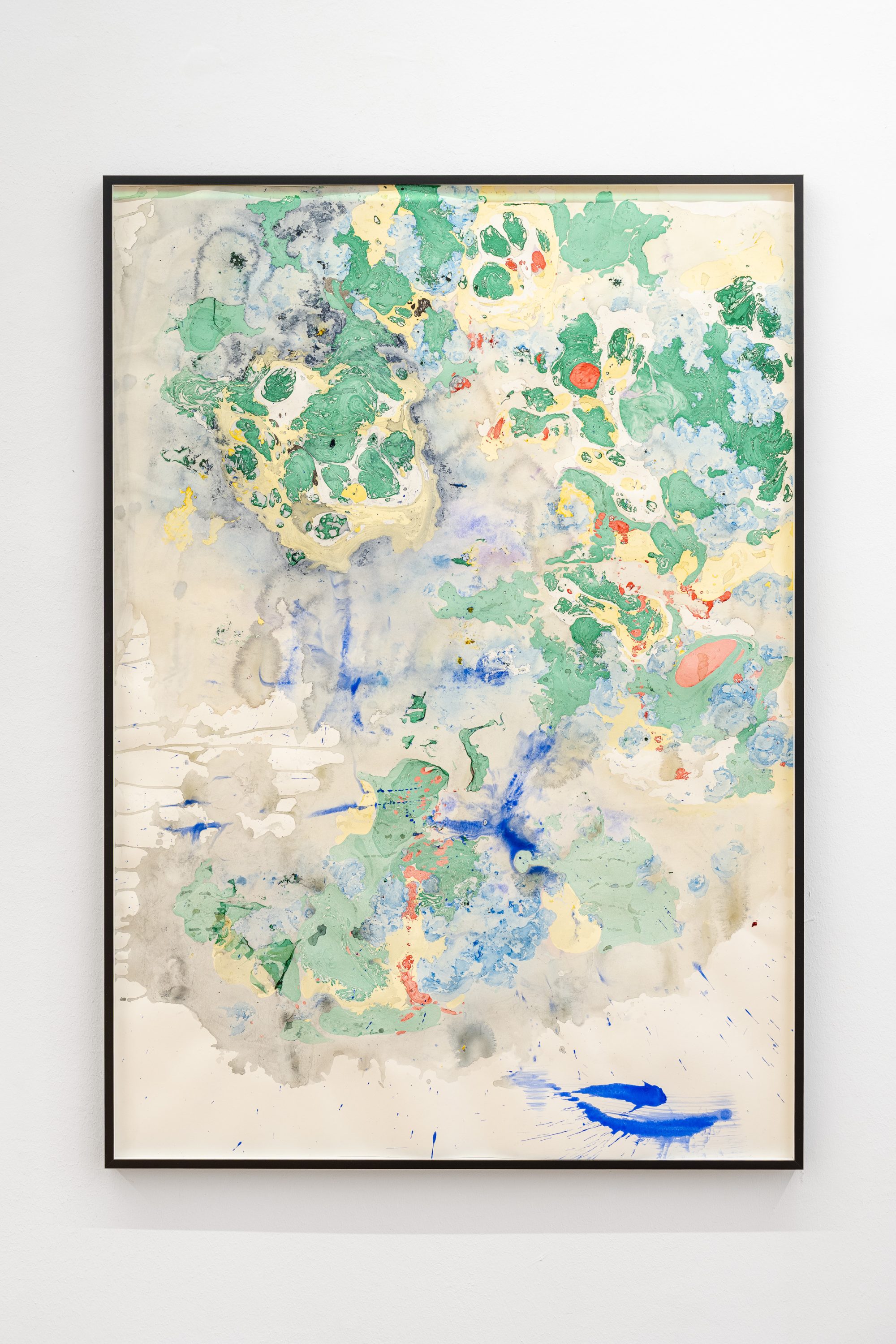
Opposite, a series of five paintings titled uncanny floatings hangs on the wall. I started these works while moving constantly between cities. Munich to Basel, Basel to New York, Brooklyn to Paris, Paris to Luxembourg. To keep track, I felt the need to ground myself. I started working literally on the ground: using the pavement I walked on, the floor I lived on, the uneven ground on which my studio rested. I wanted to keep the work light, easy to travel with, and quick to pack up.
All the displayed paintings were made without using a brush.
What do my hands remember?
I wanted to let go of traditional ideas of painting and seek a process close to my lived reality and to the way I understand sculpture.
Sculpture as a living process.
Reduce an artistic gesture to its elemental nature: color floating on water. I wanted to invite the water and the ground to create the work with me, imbuing them with their own agency.
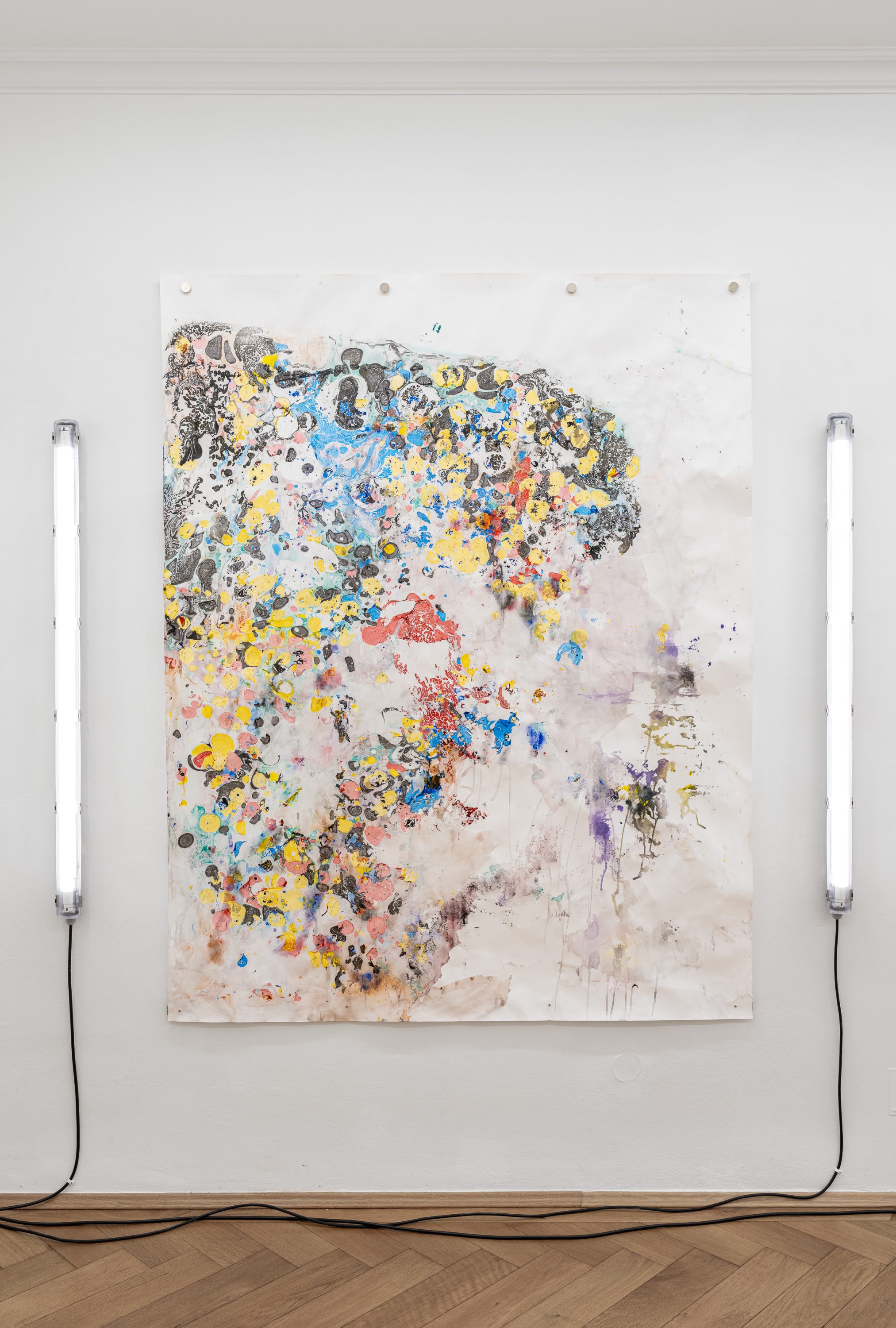
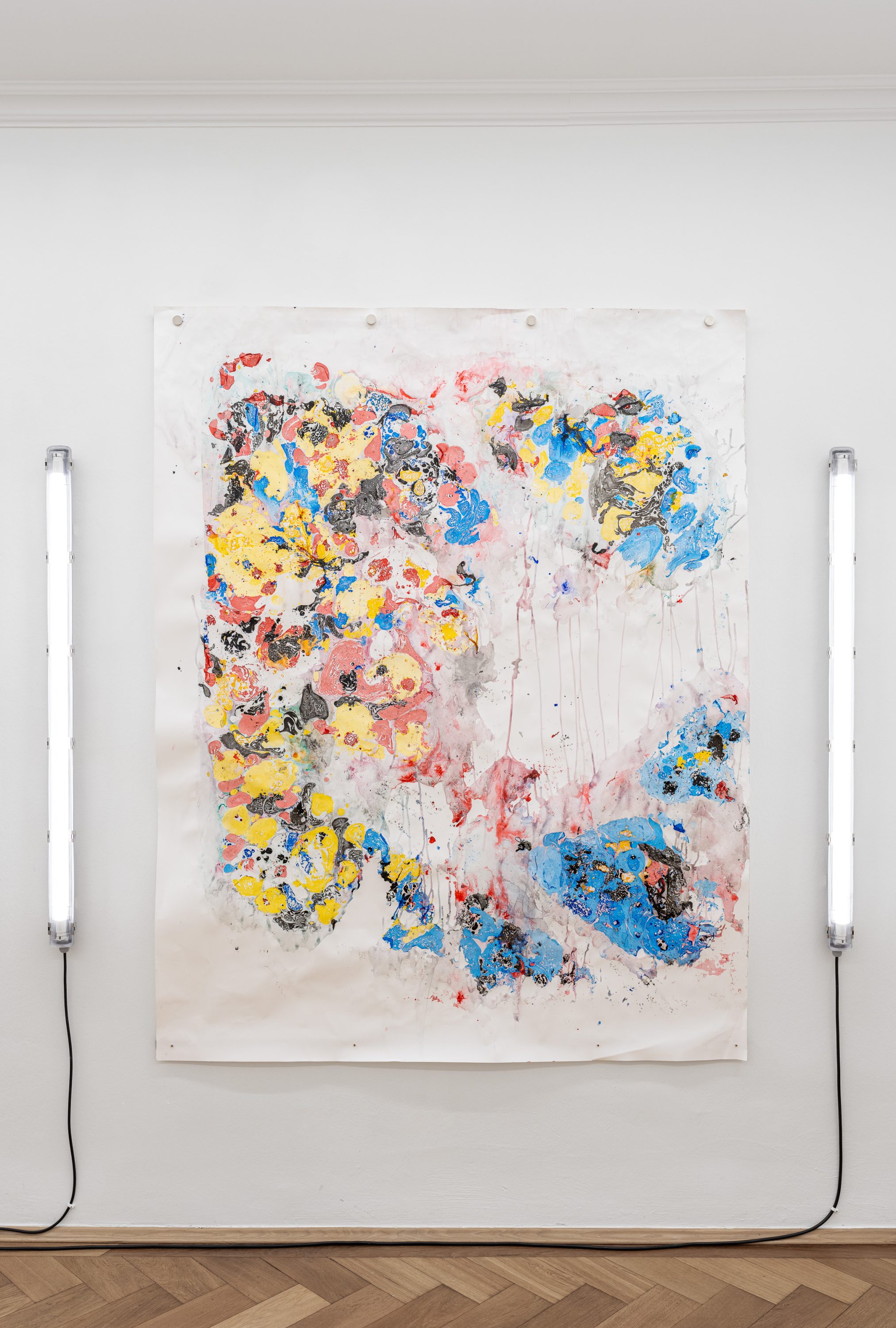
I laid thick plastic foil onto the floor of my studio and poured out buckets of water. The pooling water divided the uneven ground into pockets of liquid. Ink, acrylic, spray paint and oil emulsion each settles and spreads on its own terms, following nothing but gravity and its own weight in water. To record thoughts on water, I saw this performative process of painting, spontaneous and poetic, as a way to paint memory.
[ 3.0 / ROOM]
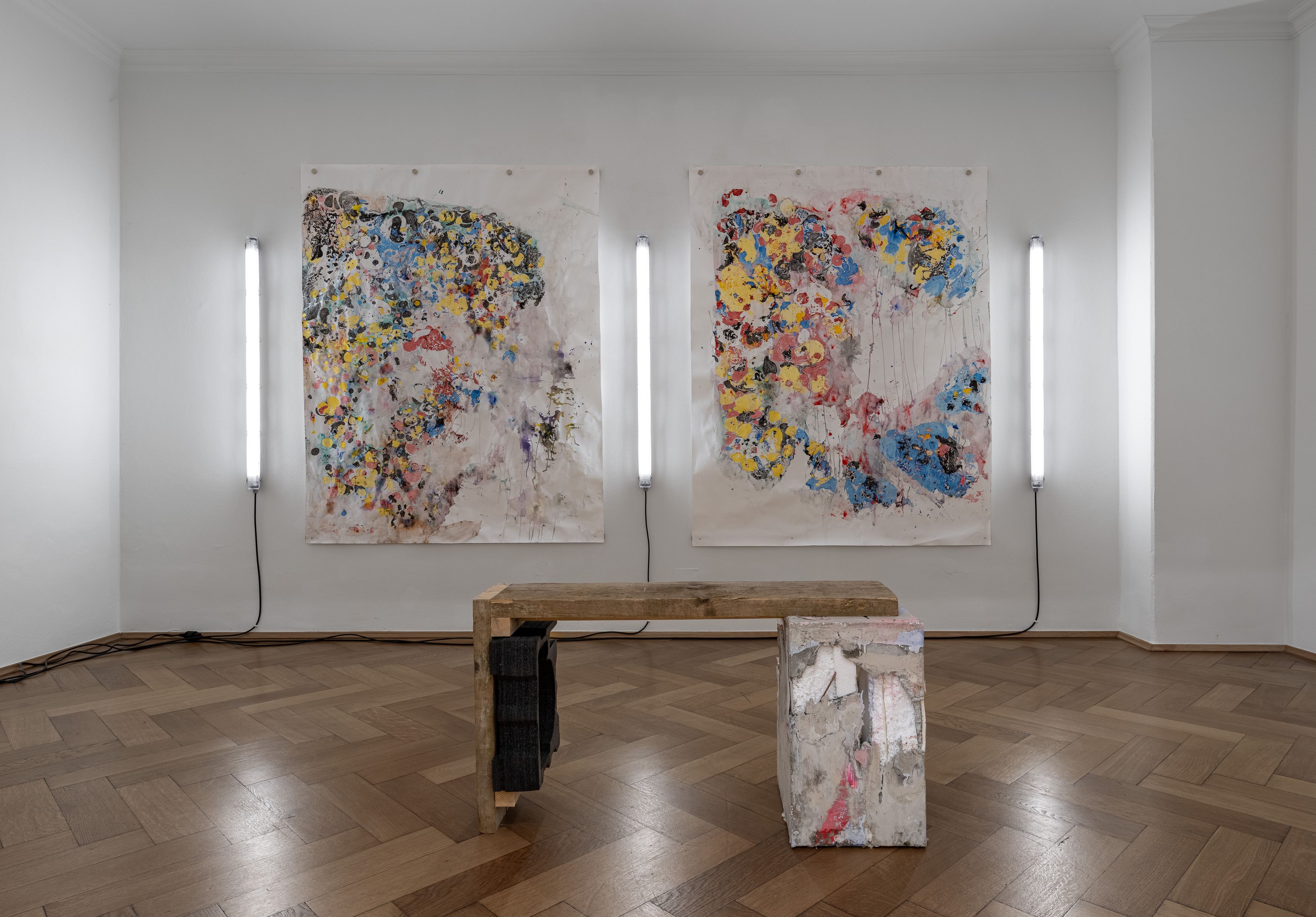
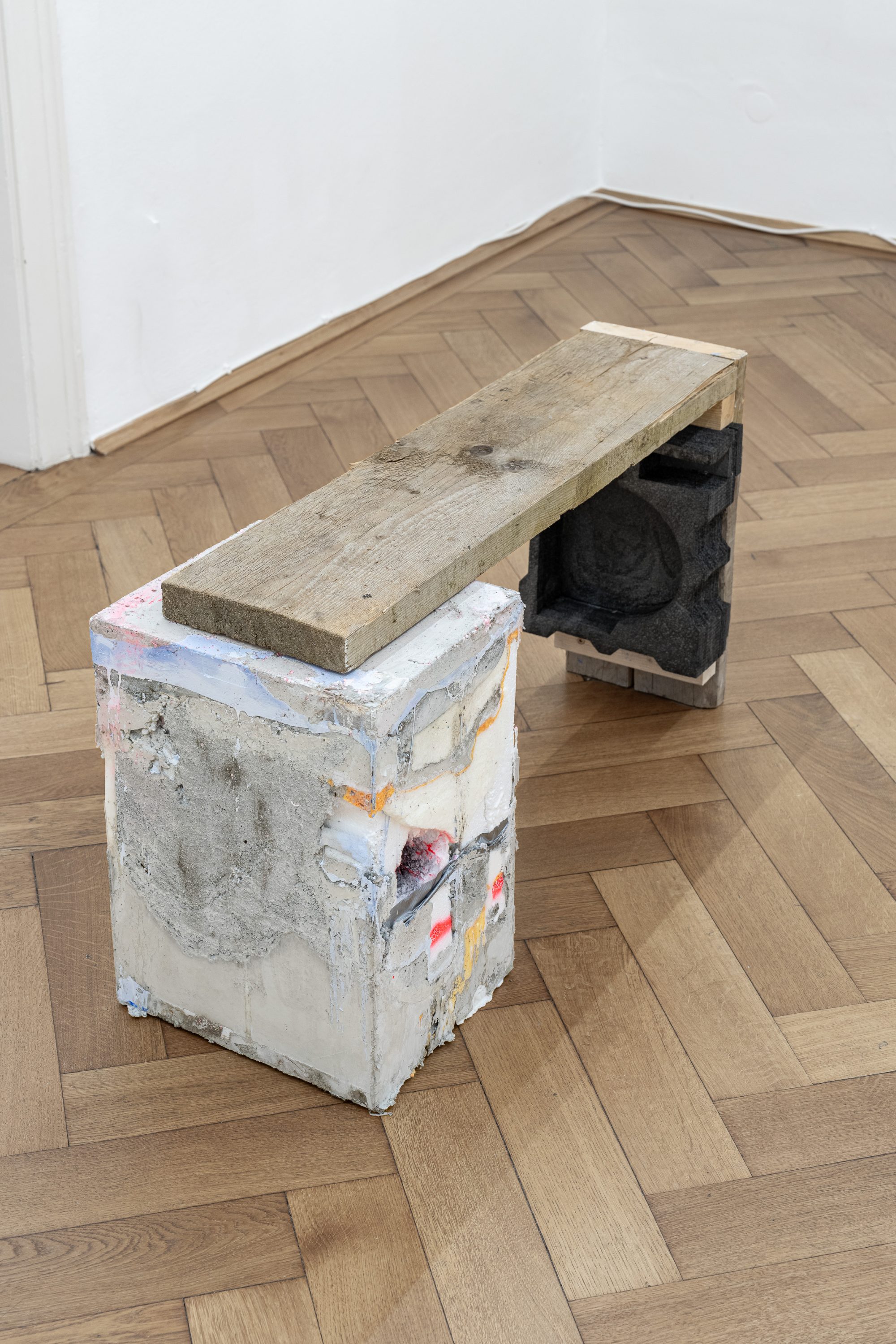
un-hold is also about clinging to a past that keeps recurring. The last room refers to my older practice of casting concrete into molds filled with debris and personal items. Cast from concrete and set under a piece of salvaged wood, benching #6 is both sculpture and support, open to be used.
In front of this is the installation maps of urban ghosts. Two large paintings divided by three vertical neon lights map abstract spatial coordinates. Using the same water-floating painting technique as uncanny floatings, they confront the visitor with their physicality while still remaining delicate and vulnerable.
Patrick Ostrowsky
Edited by Camille Jacobson